Our Mission:
The Phelps Arts Center is dedicated to highlighting and promoting all forms of art and human creativity. Through education, collaborative events, performing, and visual arts, we strive to provide a safe and inclusive environment to celebrate and create within our community.
A Building With Many Lives:
The History of the Phelps Arts Center
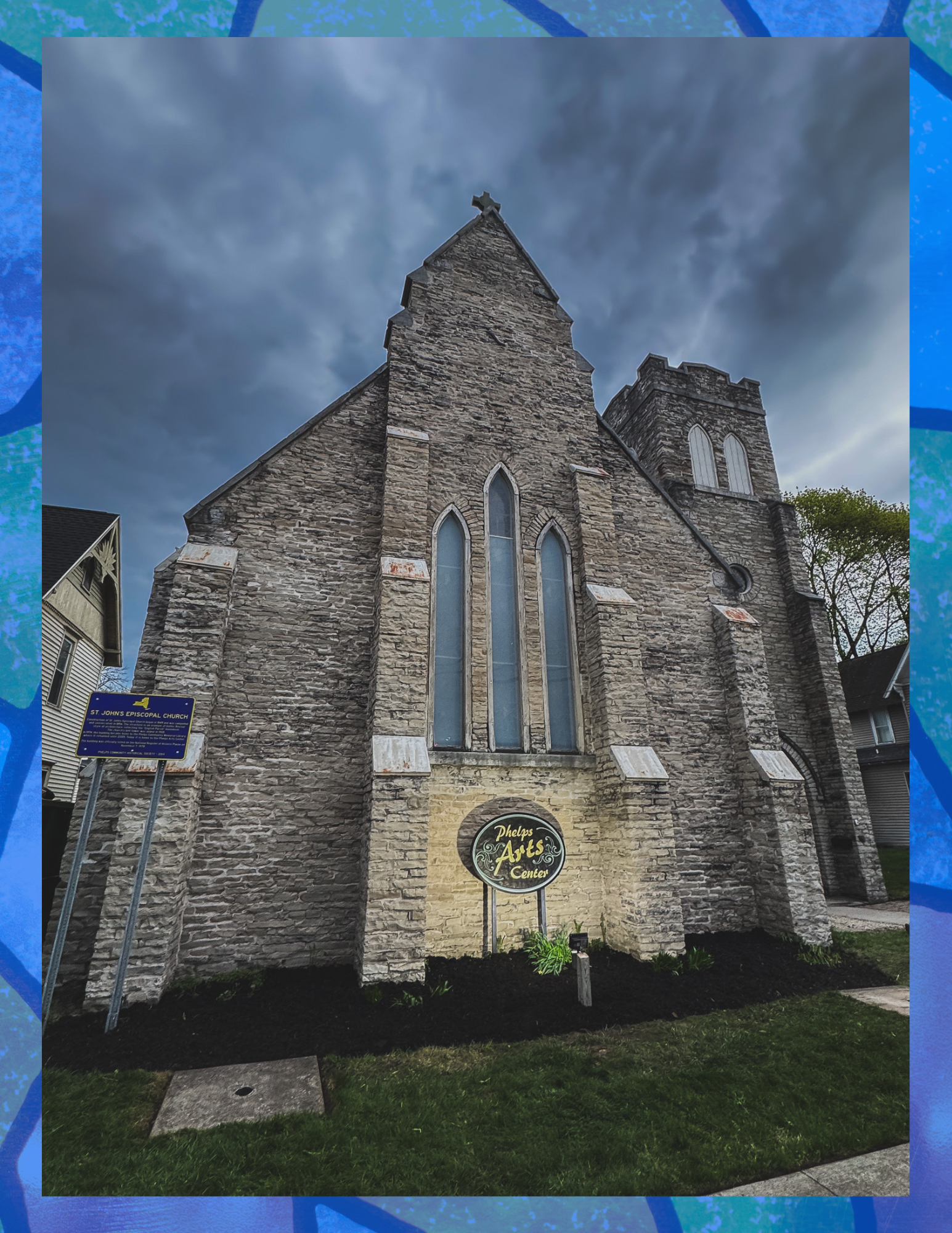
The building at 15 Church Street has been many things to the people of Phelps — a house of worship, a community library, and now a home for the arts. Its stone walls have absorbed nearly two centuries of local life.
Origins: A Church Takes Shape (1832–1856)
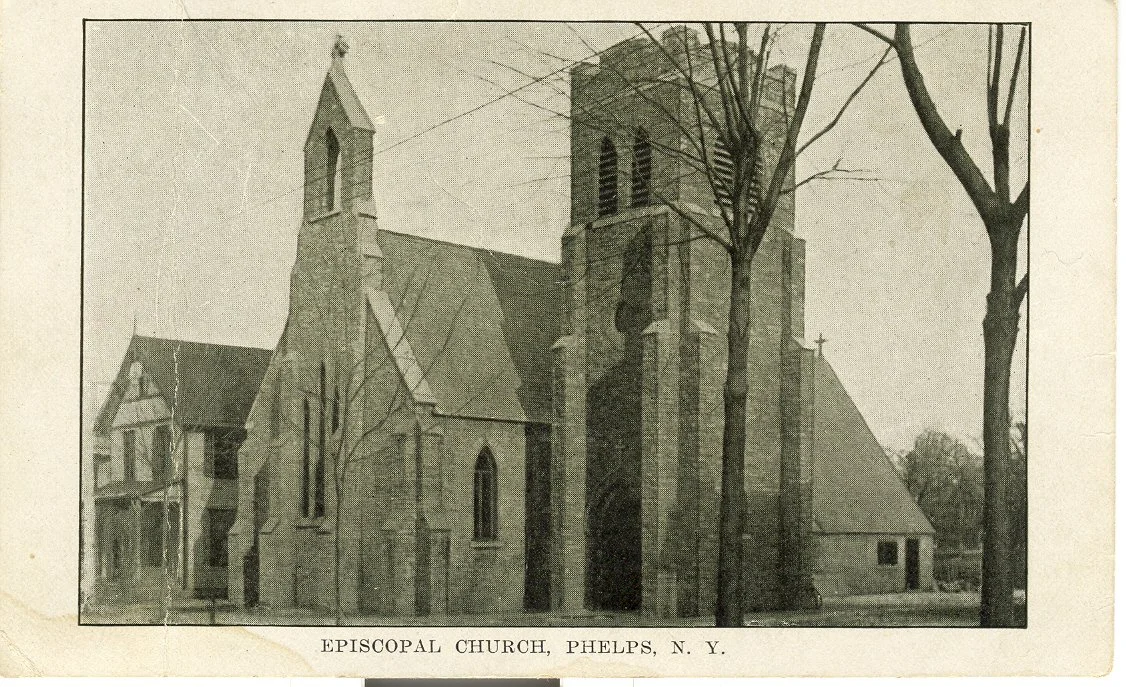
The St. John’s Episcopal congregation was organized in Phelps on November 12, 1832 under the name “The Ministers, Wardens and Vestrymen of St. John’s Church in the Town of Phelps and Village of Vienna” holding early services in public buildings around the Village of Vienna while plans were thought about for a permanent home. Around 1835, a small group of parishioners wanted to build a permanent place for worship. This group began to sell subscriptions and by 1840 selected the property on Church Street as their new location.
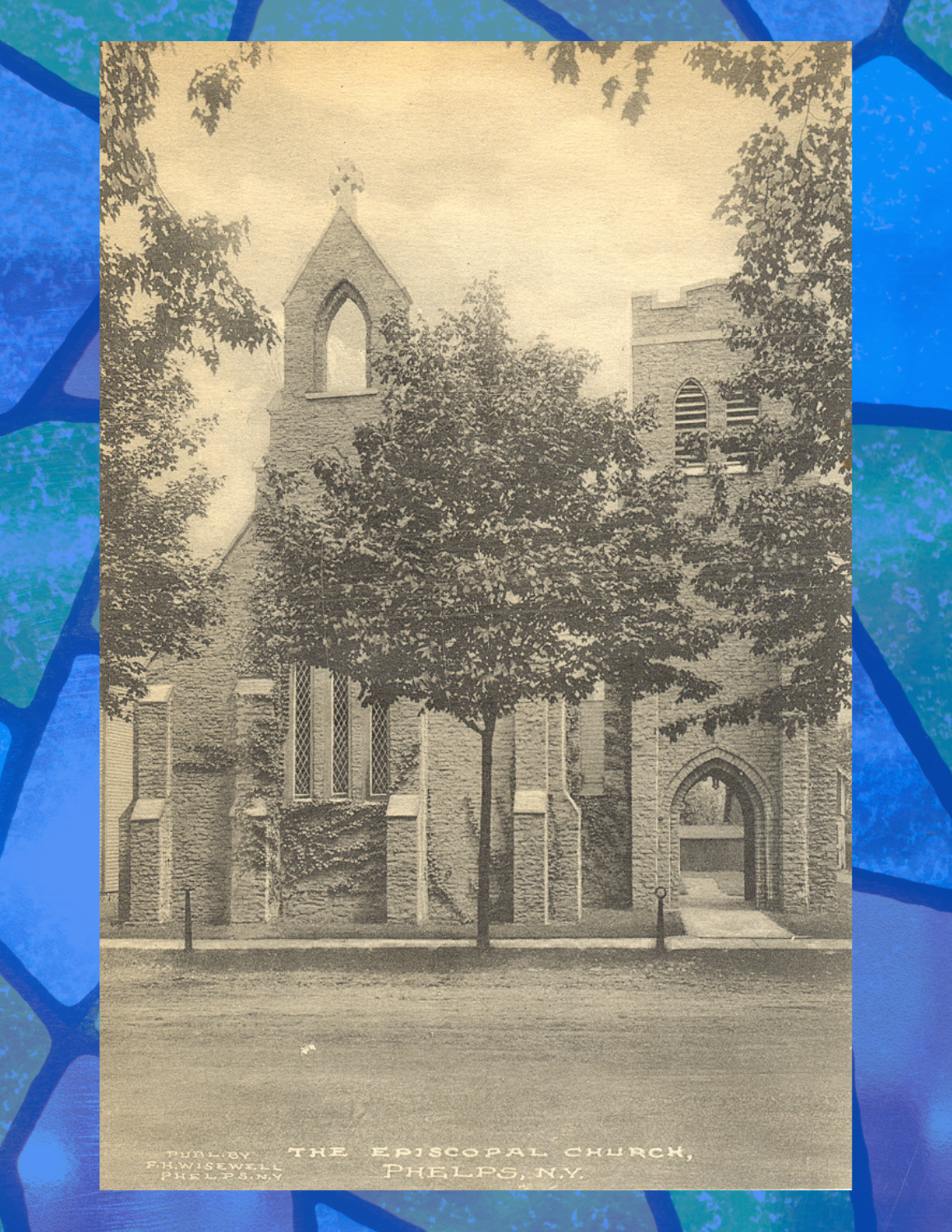
A design was drawn up for a 42’ by 56’ gothic-revival style stone church (reflecting the “English Parish” movement) on Church Street, the cost estimated at $2,480. The plans were attributed to a Major David Bates Douglass, a decorated War of 1812 veteran, distinguished civil engineer and mathematician/professor with deep ties to Geneva College (now Hobart College). They could not, however, begin any further progress in acquisition of the land and any construction due to the widespread depression that struck the region, especially the Village.
In 1841, the lot was donated by Leman and Hiram Hotchkiss (famous peppermint oil producers), and a fledgling construction effort began using stones gathered from the surrounding countryside. Enough money was raised by 1849 to allow the parishioners to purchase the property outright and begin major construction on the church.
The interior was finished and the church opened for services in 1850. Like most churches of the era, seating was divided by gender. Before the age of heated buildings men brought dogs to services for warmth, women used foot warmers, and the church employed officers to keep the peace among the animals. The interior woodwork, overseen by the Reverend Benjamin Hale, DD, President of Geneva College, was finished entirely in butternut (white walnut). When standing in the nave of the church, the original building began at the current west wall with the triple windows to the base of the steps of the raised chancel in the east.
The church was consecrated by Bishop Delaney in 1856. The last $50 of the total cost was donated to the Church by the Reverend Charles E. Douglass of Brighton, England (son of the architect), He attended the consecration while visiting the United States at the time. The money was used to purchase the cross that was mounted atop the roof’s peak.
Growth and Recognition (1871–1954)
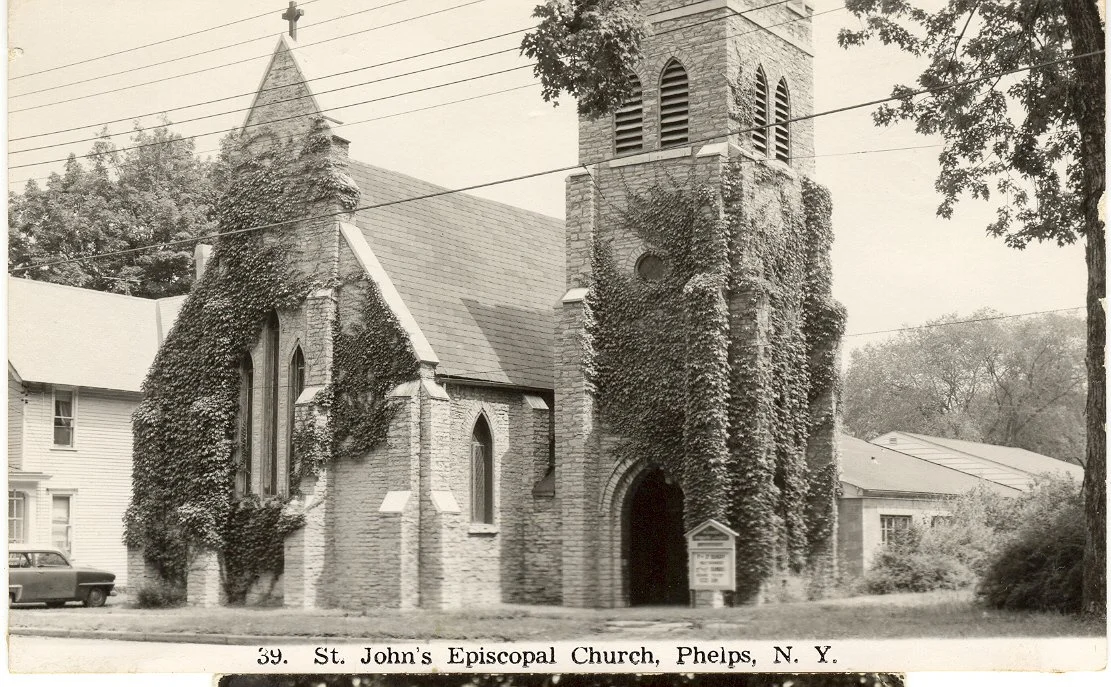
The building grew steadily over the next several decades. A bell tower fund began in 1871, with Charles McLeod of Troy, NY promising a bell upon its completion (this bell is displayed outside the main entrance). In 1888, a Mr. Sayre donated new oak pews, crafted in Newark, NY by the Trotter Company. The chancel, vestry, and organ room were added in 1897. The pipe organ installed in the new chancel was built by J.H. & C.S Odell and Company and donated by a Mrs. Wellington from Sayre, PA, along with $1,200 cash. Unfortunately, the new addition was short-lived, as a devastating fire gutted the sanctuary on December 12, 1904, destroying the organ and lighting. The bell tower was ultimately completed in 1905 and McLeod’s bell was installed.
Hardship, Resilience, and New Life (1920s–Present)
The Great Depression of the 1930s brought severe financial difficulties, enough to force the church to temporarily close. The St. John’s Ladies Guild, formed in the 1920s to help fund the repairs from the 1904 fire, continued to meet. This group laid the plans to rebuild and reactivate the parish in 1945, and with funds and materials donated from other parishes, the Diocese of Rochester and church members, St. John’s parish began the revival. They replaced leaking roofs on the building, interior walls painted and the floor rehabilitated. The older church’s stained glass windows were releaded. The original pipe organ, suffering significant water damage, was replaced with an electric one in 1949. A further building project in 1954 added a large gathering space, a kitchen, a rector’s office, a children’s room and lavatories on the south and east ends of the church. By 1967, a diminishing congregation merged with St. John’s Episcopal Church in Clifton Springs, and the church building sat vacant and dormant until the mid-1970s.
In 1974, the Phelps Library Association was notified that its rented quarters in the Crothers/Filiatreau Block at the corner of Church and Main Streets were needed by the building’s owner and the library was forced to move as soon as practically possible. An immediate search for a new home commenced and in January 1975, that search ended when the Episcopal Diocese of Rochester donated the St. John’s building to the Library Association. Upon acquisition, an architect and contractor were immediately hired and renovations began in earnest, and the former St. John’s Episcopal Church building saw a rebirth as the new home of the Phelps Community Memorial Library.
In November 1978, eleven years after its final Episcopalian service within and three years after becoming the address of the Phelps Community Memorial Library, the building was placed on the National Register of Historic Places as one of the finest examples of early Gothic Style “English Parish” architecture in Western New York. For 40 years, the Library proudly served the greater Phelps community within the beautiful confines of the structure until 2005, when the Library’s growth required a larger home.
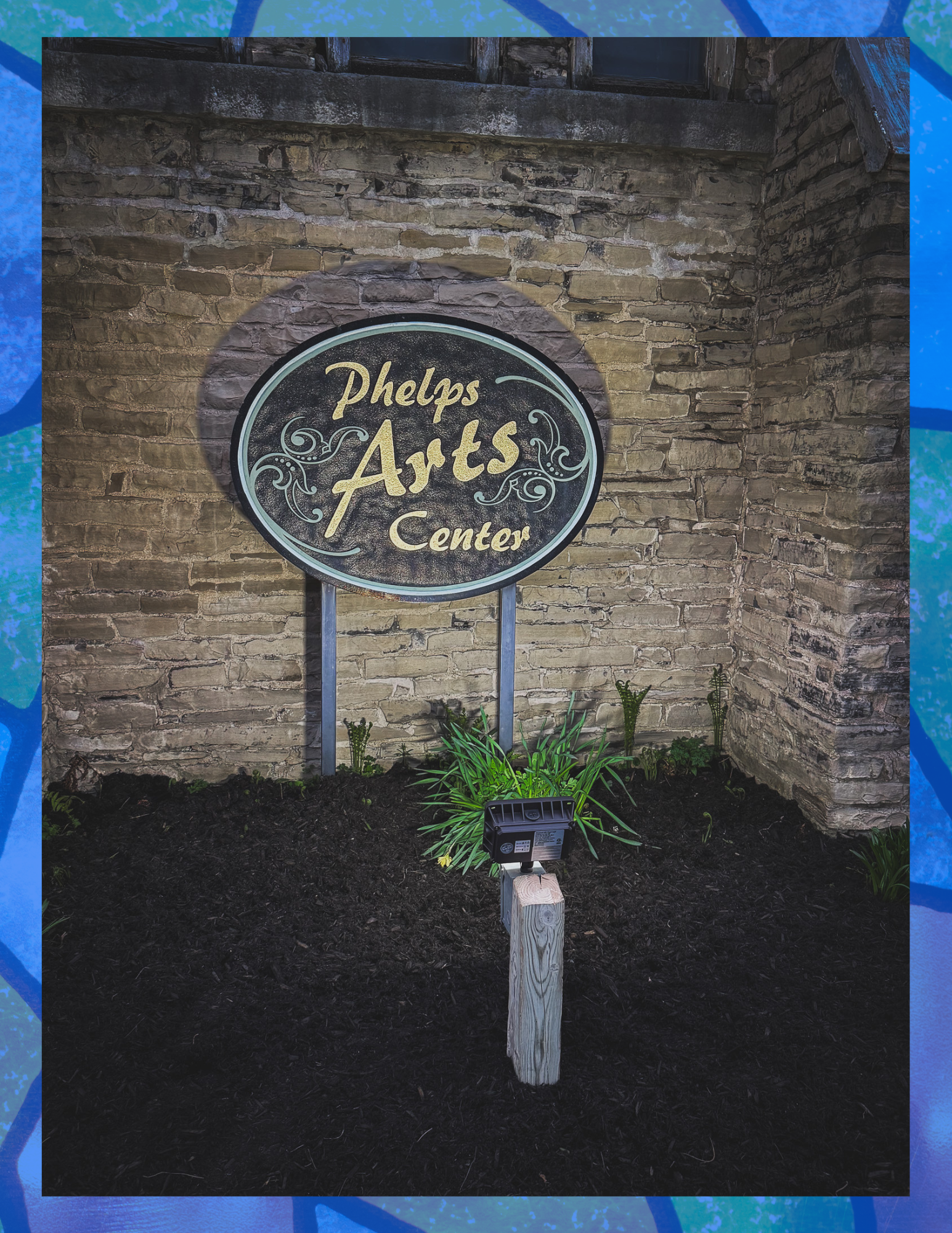
In November 2006, thanks to the generosity and encouragement of the Mary Hicks Preston Foundation, the building reopened as the Phelps Arts Center, a gathering place for artists, performers, and neighbors from across the Finger Lakes Region. Over the years it has hosted art exhibitions, live performances, craft classes, holistic fairs, drag shows, haunted houses, and more.
In April 2026, the Phelps Arts Center entered an exciting new chapter under new leadership. With fresh energy, expanded opportunities for community involvement and volunteerism, and a bold vision for the future, plans are underway to restore and revitalize this historic gem while introducing new programs and events.